

Only 36% of Americans in their 30s have more than $10,000 in savings, yet this decade represents the most critical window for building lasting financial security. While your twenties may have been about finding yourself, learning how to build wealth in your 30s becomes essential as responsibilities mount and retirement inches closer. The good news? You don’t need a six-figure salary or inheritance to create substantial wealth during this transformative decade.
Your thirties bring unique financial pressures—student loans, mortgages, growing families, and career advancement costs—but they also offer unprecedented opportunities. Higher earning potential, established credit, and decades of compound growth ahead create the perfect storm for wealth creation. The strategies outlined here work for ordinary people with ordinary incomes who want extraordinary financial freedom.
Key Takeaways
• Time is your greatest asset: Starting wealth-building habits in your 30s still provides 30+ years of compound growth
• Focus on systems over perfection: Consistent small actions outperform sporadic large efforts
• Income growth matters most: Increasing earnings while controlling lifestyle inflation accelerates wealth building
• Mindset shapes outcomes: Adopting an abundance mindset transforms how you approach money and opportunities
• Automation eliminates excuses: Setting up automatic systems removes emotional decision-making from wealth building
Why Your 30s Are a Critical Decade for Wealth Building
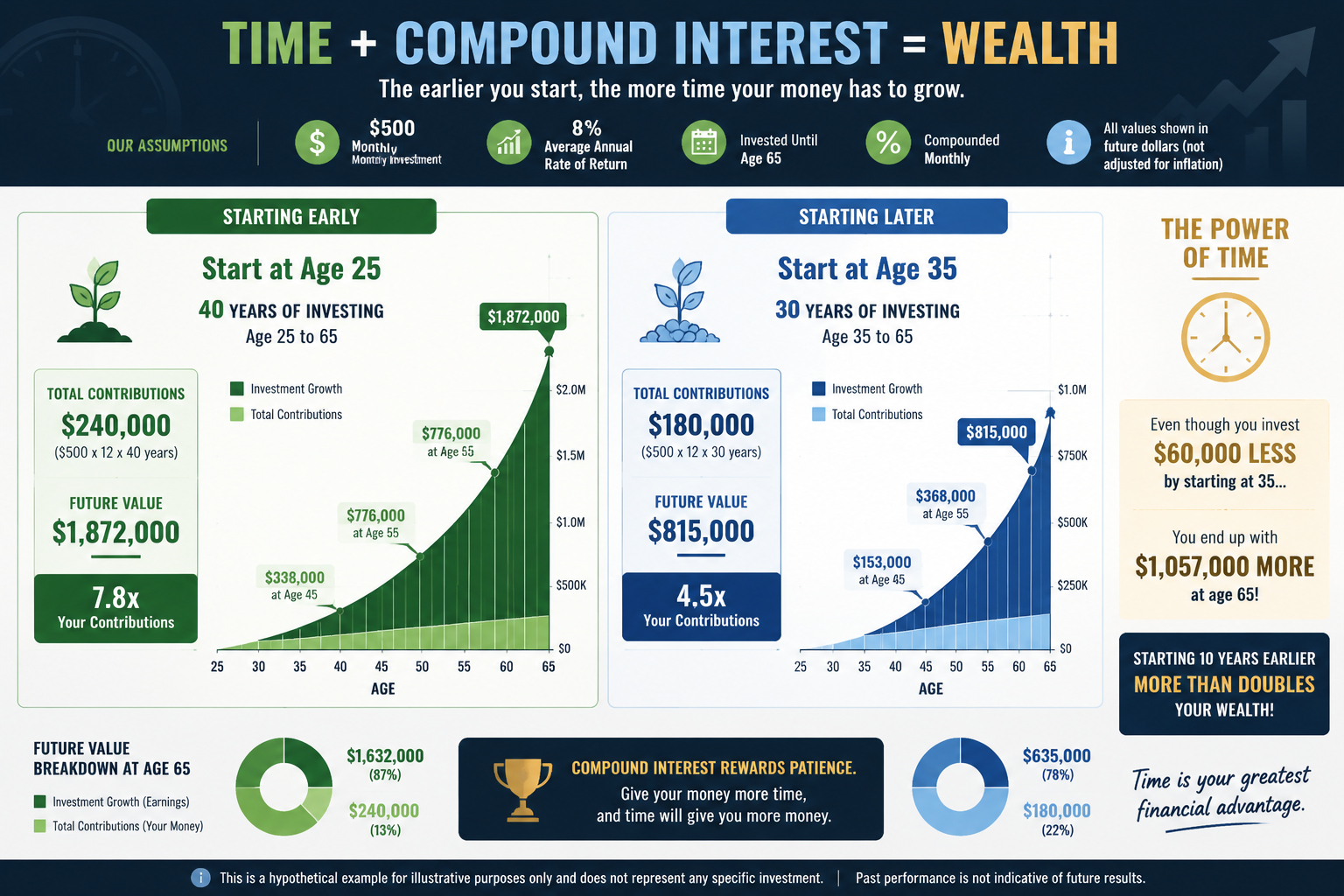
The Power of Compounding
Compound interest remains the eighth wonder of the world, and your thirties offer the sweet spot between having some money to invest and enough time for it to grow exponentially. Someone who invests $500 monthly starting at age 30 will have approximately $1.37 million by age 65, assuming a 7% annual return. Wait until 40, and that number drops to $653,000—nearly half the wealth for only a 10-year delay.
The math is unforgiving but also encouraging. Even if you’re 35 and just starting, you still have 30 years until traditional retirement age. That’s three decades for your money to compound, double, and redouble. Time matters more than perfection, so starting with whatever amount you can manage beats waiting for the “perfect” financial situation.
Higher Earning Potential
Most professionals experience their steepest income growth during their thirties. According to recent data, median earnings increase by approximately 60% between ages 30 and 40. This income acceleration, combined with established credit and work experience, creates opportunities that didn’t exist in your twenties.
Strategic income increases compound just like investments. A $10,000 salary bump invested wisely can become $100,000+ over two decades. The key lies in capturing these income gains and directing them toward wealth-building rather than lifestyle inflation.
Financial Habits Become Long-Term Patterns
Your thirties represent the decade when financial behaviors solidify into lifelong patterns. The spending habits, investment approaches, and money mindset you develop now will likely persist for decades. This makes it crucial to establish wealth-building systems rather than relying on willpower or sporadic efforts.
Research shows that people who develop consistent saving and investing habits by age 35 are significantly more likely to achieve financial independence. The neural pathways formed during this decade literally rewire your brain for financial success—or struggle.
Step 1: Understand Your Current Financial Situation
Before learning how to build wealth in your 30s effectively, you must honestly assess where you stand today. Financial self-awareness eliminates surprises and creates a roadmap for improvement.
Calculate Your Net Worth
Net worth equals assets minus liabilities—everything you own minus everything you owe. This single number provides the clearest picture of your financial health. Assets include cash, investments, retirement accounts, real estate equity, and valuable possessions. Liabilities encompass mortgages, student loans, credit card debt, car loans, and other obligations.
Don’t get discouraged if your net worth is negative or smaller than expected. Many successful wealth-builders started with student loans exceeding their assets. The goal is establishing a baseline and tracking improvement over time.
Track Monthly Spending
Money leaks destroy wealth faster than poor investments. Spend one month tracking every dollar to identify where your money actually goes versus where you think it goes. Use apps like Mint, YNAB, or simple spreadsheets to categorize expenses into needs, wants, and wealth-building contributions.
Most people discover $200-500 monthly in “invisible” spending—subscriptions they forgot about, frequent small purchases, or convenience costs that add up dramatically. Redirecting these leaks toward investments can add $50,000-125,000 to your net worth over 20 years.
Review Debt and Interest Rates
High-interest debt acts like negative compound interest, eroding wealth while you sleep. List all debts with balances, minimum payments, and interest rates. Prioritize eliminating debt above 6-8% interest rates, as these typically exceed long-term investment returns after taxes.
Consider debt consolidation or refinancing options that reduce interest rates or monthly payments. Every percentage point saved on a $50,000 debt saves $500 annually—money that can fuel wealth building instead of enriching lenders.
Set Clear Financial Goals
Vague financial wishes become specific wealth-building plans through clear goal setting. Learning to visualize your financial future helps clarify what wealth means to you personally. Define both short-term objectives (emergency fund, debt elimination) and long-term targets (retirement savings, financial independence).
Effective financial goals follow the SMART framework: Specific, Measurable, Achievable, Relevant, and Time-bound. Instead of “save more money,” commit to “increase net worth by $25,000 within 18 months through automated investing and debt reduction.”
Step 2: Build a Strong Financial Foundation
Wealth building requires a stable foundation before pursuing growth strategies. Think of this phase as constructing the basement before building the house—unsexy but absolutely essential for long-term success.
Create an Emergency Fund
Financial emergencies become wealth-building opportunities when you’re prepared. An emergency fund prevents debt accumulation during unexpected expenses and provides peace of mind that enables aggressive investing with other money.
Target 3-6 months of essential expenses in a high-yield savings account. Start with $1,000 if larger amounts feel overwhelming, then gradually build toward the full target. This fund should be easily accessible but separate from daily spending accounts to avoid temptation.
Improve Your Credit Score
Excellent credit can save tens of thousands over your lifetime through lower interest rates on mortgages, car loans, and business financing. Credit scores above 740 typically qualify for the best rates, while scores below 650 significantly increase borrowing costs.
Pay all bills on time, keep credit utilization below 30% (ideally under 10%), maintain older accounts, and avoid unnecessary credit inquiries. Consider becoming an authorized user on someone else’s excellent credit account or using secured credit cards to build positive payment history.
Protect Yourself With Insurance
Insurance prevents financial catastrophes that can destroy decades of wealth building in moments. Health insurance protects against medical bankruptcies that affect even middle-class families. Disability insurance replaces income if injury or illness prevents working—crucial since your earning ability is likely your largest asset.
Life insurance becomes essential with dependents or significant debts. Term life insurance typically provides the most coverage for the lowest cost during your thirties. Homeowners or renters insurance protects your largest assets from fire, theft, or liability claims.
Step 3: Increase Your Income Strategically
While controlling expenses matters, income growth provides the fastest path to wealth building. Your thirties offer prime opportunities for career advancement, skill development, and income diversification that weren’t available in your twenties.
Develop High-Value Skills
Skills that increase your earning potential compound like investments. Research which abilities command premium salaries in your field and invest time developing them. Technology skills, leadership capabilities, specialized knowledge, and communication abilities typically offer the highest returns.
Consider formal education, professional certifications, online courses, or mentorship programs that directly translate to higher compensation. The key is choosing skills with clear market demand rather than pursuing education for its own sake.
Negotiate Salary and Promotions
Most people leave thousands of dollars on the table by avoiding salary negotiations. Research market rates for your position using sites like Glassdoor, PayScale, or industry reports. Document your achievements, additional responsibilities, and value provided to the organization.
Approach negotiations professionally with specific requests backed by market data and performance metrics. Even a 5% salary increase compounds significantly over decades, while job changes every 2-3 years often provide 10-20% income bumps during your thirties.
Start Additional Income Streams
Multiple income sources provide security and acceleration that single jobs cannot match. Consider freelancing skills you already possess, starting online businesses, creating digital products, or investing in income-producing assets.
The goal isn’t replacing your primary income immediately but building additional cash flow that can fuel investments. An extra $500 monthly invested consistently can add $400,000+ to your net worth over 25 years. Developing an abundance mindset helps identify opportunities that scarcity thinking misses.
Avoid Lifestyle Inflation
Lifestyle inflation destroys wealth faster than market crashes. As income increases, resist the temptation to upgrade housing, cars, or spending habits proportionally. Instead, direct at least 50% of income increases toward wealth building while enjoying modest lifestyle improvements with the remainder.
This strategy allows you to enjoy success rewards while dramatically accelerating financial progress. Someone who saves half of every raise will build wealth exponentially faster than peers who spend every additional dollar earned.
Step 4: Start Investing Consistently
Saving money preserves wealth, but investing money creates wealth. Your thirties provide the perfect balance of investment knowledge, available capital, and time horizon to build substantial portfolios through consistent market participation.
Why Investing Matters
Inflation erodes purchasing power over time, making cash savings worth less each year. While savings accounts might earn 1-2% annually, historical stock market returns average 7-10% over long periods. This difference compounds dramatically—$100,000 earning 2% becomes $148,000 over 20 years, while the same amount earning 8% becomes $466,000.
Understanding how to attract wealth through smart investments involves recognizing that consistent market participation beats trying to time perfect entry points. The goal is time in the market, not timing the market.
Retirement Accounts to Prioritize
Tax-advantaged accounts supercharge wealth building by reducing current taxes or eliminating future taxes on growth. Contribute enough to employer 401(k) plans to capture full company matches—this represents guaranteed 50-100% returns on contributed amounts.
Traditional IRAs and 401(k)s provide current tax deductions but require taxes on withdrawals. Roth IRAs and Roth 401(k)s use after-tax contributions but allow tax-free growth and withdrawals. Consider your current tax bracket versus expected retirement bracket when choosing between options.
Index Funds and Long-Term Investing
Index funds provide instant diversification across hundreds or thousands of companies with minimal fees. Total stock market index funds, S&P 500 funds, and target-date funds offer simple investing approaches that historically outperform most actively managed funds over long periods.
Avoid the temptation to pick individual stocks or chase hot investment trends. Boring investing typically produces exciting results over decades, while exciting investing often produces boring (or negative) results. Consistency and low fees matter more than cleverness in long-term wealth building.
Automate Investments
Automation removes emotions and excuses from investing decisions. Set up automatic transfers from checking accounts to investment accounts immediately after payday. This “pay yourself first” approach ensures investing happens before spending temptations arise.
Dollar-cost averaging through automatic investing also smooths out market volatility by purchasing more shares when prices are low and fewer shares when prices are high. This systematic approach typically produces better results than trying to time market movements manually.
Step 5: Eliminate Financial Habits That Destroy Wealth
Wealth building requires both positive actions and eliminating negative behaviors. Many people focus solely on earning and investing more while ignoring destructive patterns that sabotage progress. Addressing these wealth destroyers can accelerate your financial growth dramatically.
Emotional Spending
Retail therapy and status purchases divert money from wealth building toward temporary emotional satisfaction. Recognize triggers that lead to unnecessary spending—stress, boredom, social pressure, or self-reward after achievements. Develop alternative responses like exercise, calling friends, or reviewing financial goals.
Implement waiting periods for non-essential purchases over $100. This simple delay often reveals that the desire was temporary rather than genuine need. Developing self-respect and confidence reduces the need to seek validation through material possessions.
Carrying High-Interest Debt
Credit card debt acts like a wealth-building emergency that requires immediate attention. Paying 18-25% interest annually makes it nearly impossible to build wealth through investing, since few investments reliably exceed these returns after taxes and fees.
Consider balance transfers to lower-rate cards, personal loans for consolidation, or aggressive debt payoff strategies like the debt avalanche (highest interest first) or debt snowball (smallest balance first) methods. Every month carrying high-interest debt costs hundreds in future wealth.
Trying to “Look Rich”
Appearing wealthy and being wealthy are often opposites. Expensive cars, designer clothes, luxury vacations, and premium housing may impress others but delay actual financial independence by years or decades. True wealth provides freedom and security rather than impressive appearances.
Focus on building assets that generate income rather than liabilities that require ongoing payments. Understanding that wealth is a mindset helps prioritize substance over appearance in financial decisions.
Waiting for the “Perfect Time”
Perfect conditions for wealth building never arrive. There will always be market uncertainty, personal challenges, or reasons to delay investing. The cost of waiting typically exceeds the cost of starting imperfectly but immediately.
Begin with whatever amount you can manage consistently, even if it’s only $50 monthly. You can increase contributions as income grows or expenses decrease, but you cannot recover time lost to indecision or perfectionism.
Step 6: Learn How Wealthy People Think Differently
Wealth building is as much psychology as mathematics. Understanding how financially successful people approach money, decisions, and opportunities can accelerate your own progress by decades. These mindset shifts often matter more than specific tactics or strategies.
Focus on Assets Instead of Appearances
Wealthy people prioritize ownership over image. Instead of financing expensive cars or luxury items, they invest in appreciating assets like stocks, real estate, or businesses that generate ongoing returns. They understand that looking rich and being rich require opposite approaches.
Ask yourself whether purchases move you toward or away from financial independence. Assets put money in your pocket over time, while liabilities take money out of your pocket. Manifesting wealth involves aligning daily decisions with long-term financial goals.
Think Long-Term
Compound growth requires patience and persistence that most people lack. Wealthy individuals make decisions based on 10-20 year outcomes rather than immediate gratification. They understand that small actions compound into massive results given sufficient time.
This long-term perspective enables them to invest consistently during market downturns, delay gratification for larger future rewards, and build businesses that take years to become profitable. Short-term thinking produces short-term results.
Invest in Skills and Knowledge
Education and skill development provide the highest returns on investment throughout your career. Wealthy people continuously learn through books, courses, mentors, and experiences that increase their earning potential and decision-making abilities.
Keeping your mind sharp and continuously learning becomes a competitive advantage in rapidly changing economies. The skills that created your current income may not sustain future growth without ongoing development.
Make Decisions Based on Freedom
True wealth provides options rather than obligations. Wealthy people structure their finances to maximize flexibility and minimize forced decisions. They maintain emergency funds, avoid excessive debt, and build multiple income streams to ensure they can make choices based on preference rather than necessity.
This freedom-focused approach influences everything from career decisions to investment strategies. The goal becomes financial independence that enables pursuing meaningful work and relationships rather than being trapped by financial obligations.
Best Wealth-Building Habits for Your 30s
Successful wealth building relies on systems rather than willpower. These habits, when implemented consistently, create automatic progress toward financial independence without requiring constant decision-making or motivation.
Automate Saving and Investing
Remove decision fatigue by setting up automatic transfers that move money from checking to savings and investment accounts immediately after payday. Treat these transfers like non-negotiable bills that must be paid before discretionary spending.
Start with amounts that feel comfortable, then increase by 1% every few months until you’re saving 20%+ of gross income. Automation ensures consistency during busy periods, market volatility, or personal challenges that might otherwise derail progress.
Live Below Your Means
Creating margin between income and expenses provides flexibility for opportunities, emergencies, and accelerated investing. This doesn’t require extreme frugality but rather conscious spending on things that matter while eliminating waste on things that don’t.
Focus on optimizing large expenses like housing, transportation, and food rather than micromanaging small purchases. A $200 monthly reduction in fixed costs provides $2,400 annually for wealth building while requiring minimal ongoing effort.
Read Financial Books and Learn Continuously
Financial education compounds over time like investments, providing better decision-making abilities that save and earn thousands throughout your lifetime. Read books about investing, personal finance, business, and wealth-building strategies from proven experts.
Dedicate 30 minutes daily to financial learning through books, podcasts, or reputable websites. This investment in knowledge will pay dividends through better investment choices, tax strategies, and income opportunities throughout your career.
Surround Yourself With Financially Responsible People
Your environment influences your financial habits more than willpower or good intentions. Spend time with people who prioritize saving, investing, and building wealth rather than those focused on consumption and lifestyle inflation.
Join investment clubs, attend financial seminars, or find online communities focused on wealth building. Developing personal power and prosperity becomes easier when surrounded by others pursuing similar goals.
Common Mistakes People Make in Their 30s
Avoiding these wealth-destroying mistakes can save years of financial progress and prevent costly setbacks that require decades to recover from. Learn from others’ experiences rather than making these expensive errors yourself.
Ignoring Retirement Savings
Every year of delayed retirement investing costs exponentially more in required future contributions. Someone who starts investing $300 monthly at age 30 will have more retirement wealth than someone who starts investing $600 monthly at age 40, despite contributing $36,000 less total.
Take advantage of employer 401(k) matches immediately—this represents free money that disappears if not claimed. Even during debt payoff or tight budgets, contribute enough to capture full employer matches before focusing on other financial goals.
Buying Too Much House or Car
House-poor and car-poor situations trap people in payments that prevent wealth building for decades. Just because you qualify for large loans doesn’t mean you should accept them. Banks approve based on income, not your other financial goals or obligations.
Consider housing costs (including taxes, insurance, maintenance) under 25% of gross income rather than the 28-30% that lenders typically approve. Choose reliable used cars over new vehicles, and avoid financing luxury features that don’t improve transportation functionality.
Depending on One Income Source
Single income sources create vulnerability to job loss, industry changes, or economic downturns. Develop multiple income streams through side businesses, freelancing, investments, or passive income sources that provide security and acceleration.
This diversification also creates opportunities for career risks like starting businesses or changing industries, since other income sources provide safety nets during transitions.
Not Having a Financial Plan
Drifting financially produces random results rather than intentional wealth building. Create written plans with specific goals, timelines, and action steps rather than hoping things work out somehow.
Review and adjust plans annually as circumstances change, but maintain consistent focus on wealth-building priorities. Having clarity in defining your financial desires provides direction for daily decisions and long-term strategies.
How to Build Wealth Even With a Moderate Income
Wealth building doesn’t require high incomes—it requires smart systems and consistent execution over time. Many people with modest salaries build substantial wealth through disciplined habits and strategic decisions that compound over decades.
Focus on Consistency Over Perfection
Small improvements maintained over time produce better results than sporadic large efforts that aren’t sustainable. Investing $200 monthly for 30 years creates more wealth than investing $2,000 annually for 10 years, despite contributing $12,000 less total.
Start with whatever amount fits your current budget, then increase gradually as income grows or expenses decrease. The habit of consistent investing matters more than the initial amount, since you can always increase contributions later.
Increase Savings Rate Gradually
Sustainable progress beats extreme budgeting that leads to eventual rebellion and abandoned goals. Increase your savings rate by 1% every few months rather than attempting dramatic lifestyle changes that feel restrictive or punitive.
This gradual approach allows lifestyle adjustments without feeling deprived, while still producing substantial wealth building acceleration over time. A savings rate that grows from 5% to 20% over several years creates lasting change without shock.
Use Side Income Wisely
Invest extra earnings instead of inflating lifestyle to accelerate wealth building without reducing current living standards. Treat side income, bonuses, tax refunds, and windfalls as wealth-building fuel rather than spending opportunities.
This strategy allows you to maintain your current lifestyle while dramatically increasing investment contributions through additional income sources. The psychological benefit of not reducing current spending makes this approach more sustainable long-term.
Avoid Comparing Yourself to Others
Social comparison sabotages wealth building by encouraging lifestyle inflation and status spending that delays financial independence. Focus on your own progress rather than others’ apparent success or possessions.
Remember that appearances often mislead—many people with impressive lifestyles have negative net worth and high financial stress. Cultivating self-love and acceptance reduces the need for external validation through material possessions.
Signs You’re Building Wealth Successfully
Track these indicators to confirm your wealth-building strategies are working effectively. Progress may feel slow day-to-day, but these metrics reveal whether you’re moving in the right direction over time.
Growing Savings and Investments
Net worth should increase consistently even during market volatility, as ongoing contributions offset temporary market declines. Track your total assets minus liabilities monthly to see progress trends rather than focusing on short-term fluctuations.
Investment accounts should grow through both contributions and market gains over time. Don’t panic during market downturns—continue consistent investing to take advantage of lower prices that will benefit you when markets recover.
Reduced Financial Stress
Money anxiety should decrease as emergency funds grow and financial systems become established. You’ll worry less about unexpected expenses or market volatility when you have adequate reserves and long-term perspectives.
Financial confidence grows as you develop knowledge and experience with investing, budgeting, and wealth-building strategies. This reduced stress often improves other life areas including relationships, health, and career performance.
Increasing Net Worth
Your net worth trajectory provides the clearest measure of wealth-building success. Even during years with market declines, consistent saving and investing should produce net worth growth through ongoing contributions.
Calculate net worth quarterly rather than daily to avoid getting distracted by short-term market movements. Focus on the long-term trend rather than temporary fluctuations that are normal parts of wealth building.
Better Financial Discipline
Money management becomes easier as good habits become automatic and you develop systems that support your goals. You’ll make better spending decisions naturally rather than relying on willpower or constant monitoring.
This improved discipline extends beyond money to other life areas, as the skills developed through wealth building—delayed gratification, long-term thinking, systematic approaches—benefit career, health, and relationship goals.
More Freedom and Flexibility in Decisions
Growing wealth provides options that weren’t available when living paycheck to paycheck. You can take career risks, handle emergencies without debt, and make decisions based on preference rather than financial desperation.
This freedom compounds over time, eventually enabling choices like early retirement, career changes, entrepreneurship, or extended travel that require financial independence to pursue safely.
Simple 10-Year Wealth-Building Plan for Your 30s
This decade-long roadmap provides specific focus areas for each phase of wealth building during your thirties. Adjust timelines based on your starting point, but maintain consistent progress toward each milestone.
Years 1–2: Build Emergency Savings and Eliminate High-Interest Debt
Focus on financial stability before pursuing growth strategies. Build a $1,000 emergency fund immediately, then work toward 3-6 months of expenses while aggressively paying off credit cards and other high-interest debt.
Contribute enough to employer 401(k) plans to capture full matches, but prioritize debt elimination and emergency savings over additional investing during this phase. Building self-discipline during this foundation-building period creates habits that support long-term success.
Years 3–5: Increase Investing and Grow Income Streams
Accelerate wealth building through increased investment contributions and income diversification. Target saving 15-20% of gross income through retirement accounts, taxable investments, and other wealth-building vehicles.
Develop additional income sources through side businesses, freelancing, or skill development that increases primary income. Focus on building systems that generate ongoing returns rather than trading time for money indefinitely.
Years 6–8: Expand Investments and Strengthen Financial Stability
Diversify beyond basic index funds into real estate, international investments, or other asset classes that reduce overall portfolio risk. Consider maxing out retirement account contributions if income allows.
Strengthen insurance coverage and estate planning as wealth grows and family responsibilities increase. Build taxable investment accounts that provide flexibility for goals before traditional retirement age.
Years 9–10: Focus on Long-Term Growth and Financial Independence
Optimize for maximum wealth building through tax strategies, advanced investment techniques, and business ownership opportunities that provide equity growth rather than just income.
Calculate your financial independence number and timeline based on current trajectory. Make strategic decisions about career, location, and lifestyle that accelerate progress toward complete financial freedom.
Conclusion
Learning how to build wealth in your 30s represents one of the most important skills you can develop during this critical decade. The strategies outlined here—from building emergency funds and eliminating debt to investing consistently and developing multiple income streams—provide a proven roadmap that works regardless of your starting point or current income level.
The key to successful wealth building lies in consistency rather than perfection. Start with whatever amount you can manage today, automate your systems to remove decision fatigue, and gradually increase your efforts as income grows and habits solidify. Remember that attracting wealth and abundance begins with changing your relationship with money and adopting the long-term perspective that compound growth requires.
Your thirties offer the perfect balance of earning potential, time horizon, and life experience to build substantial wealth over the next 30+ years. The small financial decisions you make today will compound into major life freedom over time, providing options and security that transform not just your bank account, but your entire approach to living.
Take action today by calculating your net worth, setting up automatic transfers to savings and investment accounts, and choosing one wealth-building habit to implement immediately. The best time to start building wealth was 10 years ago—the second best time is right now.