

Only 33% of Americans have a written financial plan, yet those who do are twice as likely to feel confident about their financial future. This stark reality reveals why so many people work their entire lives without building meaningful wealth, while others with similar incomes create lasting financial freedom.
Learning how to create wealth isn’t about earning a massive salary or discovering secret investment tricks. True wealth building requires understanding fundamental principles that anyone can apply, regardless of their starting point. The difference between those who accumulate wealth and those who live paycheck to paycheck often comes down to consistent habits and strategic thinking rather than income level.
Most people confuse earning money with creating wealth. Earning provides immediate income, but wealth creation involves building assets that generate money over time. This distinction shapes every financial decision and determines long-term success. The strategies outlined here focus on practical, proven methods that ordinary people use to build extraordinary financial futures.
Key Takeaways
• Wealth creation requires spending less than you earn and consistently investing the difference in appreciating assets
• Time and compound growth are your greatest allies – starting early matters more than starting with large amounts
• Multiple income streams and asset ownership provide financial security and accelerated wealth building
• Financial education and long-term thinking separate successful wealth builders from those who struggle financially
• Protecting wealth through insurance and diversification ensures your financial progress remains secure
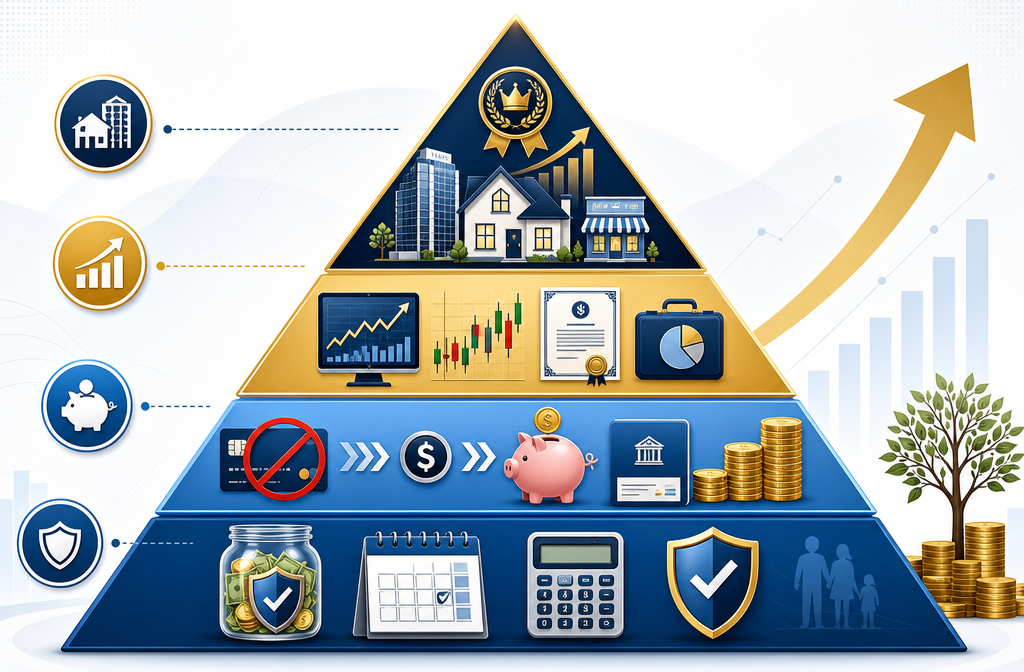
What Does It Mean to Create Wealth?
Wealth represents financial resources that provide freedom, security, and opportunity. Unlike income, which stops when you stop working, wealth continues generating value through investments, businesses, and appreciating assets. Understanding this difference transforms how you approach money management.
Income flows in and out of your life, covering expenses and lifestyle costs. Wealth accumulates over time, creating a foundation that eventually supports your lifestyle without requiring active work. The wealthy focus on acquiring assets—things that put money in their pocket—rather than liabilities that take money out.
True wealth creation happens through consistent habits practiced over years or decades. Small, regular contributions to investments often produce better results than sporadic large investments. This principle, combined with compound growth, explains why people with modest incomes can build substantial wealth while high earners sometimes struggle financially.
The freedom that wealth provides extends beyond money. Wealthy individuals can choose how they spend their time, pursue meaningful work, support causes they care about, and weather financial emergencies without stress. This freedom comes from building assets that work independently of daily effort.
Why Most People Struggle to Build Wealth
Living Beyond Their Means
Lifestyle inflation destroys wealth-building potential faster than almost any other financial mistake. As income increases, many people automatically increase their spending to match, leaving no room for saving or investing. This pattern keeps people trapped in the earn-and-spend cycle regardless of income level.
Credit cards and easy financing make it simple to spend money you don’t have. Consumer debt creates negative compound interest, where money works against you instead of for you. Every dollar spent on interest payments is a dollar that can’t build wealth through investments.
Lack of Financial Education
Most people never learn how money actually works. Schools rarely teach budgeting, investing, or wealth-building principles, leaving adults to figure out complex financial concepts on their own. This knowledge gap leads to poor decisions that compound over time.
Without understanding concepts like compound interest, asset allocation, or tax efficiency, people make choices that seem logical but actually hinder wealth creation. Learning proper financial principles becomes essential for anyone serious about building lasting wealth.
Fear and Short-Term Thinking
Emotional decision-making sabotages long-term wealth building. Fear of market volatility keeps people in low-return savings accounts, while greed drives them toward risky get-rich-quick schemes. Both approaches typically produce disappointing results.
Instant gratification culture makes it difficult to delay purchases for future benefits. The ability to wait—to invest money instead of spending it immediately—separates successful wealth builders from those who struggle financially.
Not Investing Early Enough
Time is the most powerful wealth-building tool, yet many people wait until their 40s or 50s to start serious investing. Someone who invests $200 monthly starting at age 25 will likely accumulate more wealth than someone who invests $500 monthly starting at age 40, assuming similar returns.
Compound growth requires time to work effectively. The earlier you start, the less money you need to contribute to reach your wealth goals. Waiting even five years can cost hundreds of thousands of dollars in potential wealth over a lifetime.
Step-by-Step Guide on How to Create Wealth
1. Spend Less Than You Earn
Why Financial Margin Matters
Creating space between income and expenses provides the foundation for all wealth building. This margin—the difference between what you earn and spend—becomes the fuel for investments, emergency funds, and asset purchases. Without this margin, wealth creation becomes impossible.
Financial margin also provides flexibility during economic uncertainty. People living paycheck to paycheck have no buffer when income drops or expenses increase unexpectedly. Those with margin can weather storms and even take advantage of opportunities during difficult times.
Avoid Lifestyle Inflation
Keeping expenses stable as income grows dramatically accelerates wealth building. Instead of upgrading your lifestyle with every raise or bonus, direct additional income toward investments and savings. This strategy can cut decades off your wealth-building timeline.
Conscious spending decisions help maintain this discipline. Before making purchases, especially large ones, consider the opportunity cost—what that money could become if invested instead. A $30,000 car purchase might cost $200,000 in potential wealth over 20 years when you factor in investment returns.
Build Financial Discipline
Automated systems reduce the need for willpower. Set up automatic transfers to savings and investment accounts immediately after payday. When money moves automatically, you’re less likely to spend it on impulse purchases.
Track spending regularly to maintain awareness of where money goes. Many people are surprised to discover how much they spend on small, frequent purchases that add up significantly over time. This awareness naturally leads to better spending decisions.
2. Create a Financial Plan
Set Clear Financial Goals
Specific, measurable goals provide direction and motivation for wealth-building efforts. Instead of vague goals like “save more money,” set precise targets like “accumulate $100,000 in investments by age 35” or “generate $3,000 monthly passive income by retirement.”
Short-term and long-term objectives work together to maintain momentum. Short-term goals (emergency fund, debt payoff) provide quick wins that build confidence, while long-term goals (retirement, financial independence) guide major decisions and strategy.
Track Income and Expenses
Understanding cash flow reveals opportunities for improvement that might otherwise go unnoticed. Many people underestimate their expenses and overestimate their available money for wealth building. Accurate tracking provides the data needed for effective planning.
Monthly financial reviews help maintain progress toward goals and catch problems early. Spending 30 minutes each month reviewing your financial situation can prevent small issues from becoming major setbacks.
Build a Budget That Works
Flexible budgeting strategies work better than rigid systems for most people. The 50/30/20 rule (50% needs, 30% wants, 20% savings/investments) provides a simple framework that adapts to different income levels and life situations.
Zero-based budgeting ensures every dollar has a purpose. This approach assigns all income to specific categories—expenses, savings, investments—leaving no money unaccounted for. This method maximizes wealth-building potential by eliminating wasteful spending.
3. Build an Emergency Fund
Why Financial Stability Comes First
Emergency funds prevent debt accumulation during unexpected situations like job loss, medical expenses, or major repairs. Without this buffer, people often turn to credit cards or loans, creating debt that slows wealth building for years.
Financial security improves decision-making by reducing stress and fear. When you know you can handle emergencies, you’re more likely to take calculated risks that accelerate wealth building, such as investing in growth assets or starting a business.
Recommended Savings Targets
Start with $1,000 for basic emergency coverage, then build toward 3-6 months of expenses. This two-step approach provides quick protection while working toward full security. Even $1,000 can prevent most minor emergencies from becoming debt problems.
High-yield savings accounts keep emergency funds accessible while earning some return. Online banks typically offer better rates than traditional banks, helping your emergency fund grow while remaining liquid for actual emergencies.
Reduce Financial Stress
Peace of mind has real financial value. People with emergency funds sleep better, perform better at work, and make better financial decisions. This psychological benefit often leads to increased income and better wealth-building results over time.
Emergency funds also prevent investment mistakes. When unexpected expenses arise, people with emergency funds don’t need to sell investments at bad times or miss investment opportunities because they need cash immediately.
4. Eliminate High-Interest Debt
Why Debt Slows Wealth Creation
Interest payments represent negative returns on your money. Credit card debt at 18% interest requires investments returning more than 18% just to break even—a difficult standard to meet consistently. Eliminating high-interest debt provides guaranteed returns equal to the interest rate.
Debt payments reduce available money for wealth-building activities. Every dollar going to debt service is a dollar that can’t be invested in appreciating assets. This opportunity cost compounds over time, significantly impacting long-term wealth accumulation.
Prioritize Toxic Debt
Credit cards and payday loans typically carry the highest interest rates and should be eliminated first. These debts can easily cost 15-25% annually, making them extremely expensive compared to other financial obligations.
Focus intensity on one debt at a time rather than making minimum payments on everything. This approach, whether using the debt snowball (smallest balances first) or debt avalanche (highest rates first) method, creates momentum and faster progress.
Use Smart Debt Reduction Strategies
The debt snowball method pays minimum amounts on all debts except the smallest, which receives all extra payments. This approach provides psychological wins that maintain motivation throughout the debt elimination process.
The debt avalanche method targets the highest interest rate debt first, minimizing total interest paid. This mathematically optimal approach saves more money but may take longer to show visible progress on individual accounts.
5. Increase Your Income Strategically
Develop High-Value Skills
Investing in yourself often provides the highest returns of any wealth-building strategy. Skills that increase your earning potential—technology, sales, leadership, specialized expertise—can add thousands of dollars annually to your income for decades.
Continuous learning keeps your skills relevant in changing markets. Industries evolve rapidly, and professionals who adapt their skills maintain higher earning potential throughout their careers. This investment in human capital pays dividends for life.
Pursue Career Growth
Strategic career moves can dramatically accelerate wealth building. A promotion or job change that increases income by $10,000 annually adds $400,000 to lifetime earnings over a 40-year career, not counting the compound effect of investing that additional income.
Professional networking opens doors to opportunities that aren’t publicly advertised. Many high-paying positions are filled through referrals and connections rather than job postings. Building relationships within your industry creates access to these hidden opportunities.
Create Multiple Income Streams
Diversifying income sources provides security and acceleration. Side businesses, freelancing, rental properties, or investment income can supplement primary employment and speed up wealth accumulation while reducing dependence on any single income source.
Passive income streams eventually reduce the need for active work. While most additional income streams start actively—requiring time and effort—many can evolve into passive income that continues flowing with minimal ongoing work.
6. Start Investing Consistently
Why Investing Is Essential
Inflation erodes purchasing power over time, making cash savings less valuable each year. Investments in appreciating assets help maintain and grow purchasing power, ensuring your wealth keeps pace with or exceeds inflation.
Compound growth multiplies wealth far beyond what savings alone can achieve. An investment earning 7% annually doubles approximately every 10 years through compound growth, turning modest regular contributions into substantial wealth over time.
Beginner-Friendly Investment Options
Index funds and ETFs provide instant diversification and professional management at low costs. These investments track market indexes, offering broad exposure to hundreds or thousands of companies with a single purchase.
Target-date funds automatically adjust risk levels as you approach retirement, making them ideal for hands-off investors. These funds start with growth-focused investments when you’re young and gradually shift toward conservative investments as retirement approaches.
Retirement accounts like 401(k)s and IRAs offer tax advantages that significantly boost long-term returns. Employer matching in 401(k) plans provides immediate 50-100% returns on contributions up to the match limit—the closest thing to free money in investing.
The Power of Compound Growth
Time transforms small contributions into large sums through compound growth. $300 invested monthly for 30 years at 7% annual returns grows to over $750,000, with less than $110,000 coming from actual contributions and the rest from compound growth.
Reinvesting returns accelerates the process by putting all investment gains back to work immediately. Dividends and capital gains that get reinvested start earning their own returns, creating exponential growth over long periods.
Automate Investments
Consistent investing beats perfect timing in building long-term wealth. Dollar-cost averaging—investing the same amount regularly regardless of market conditions—reduces the impact of market volatility and eliminates the need to time market movements.
Automatic investment plans remove emotional decision-making from the process. When investments happen automatically, you’re less likely to skip contributions during market downturns or spend the money on other things during good times.
7. Focus on Buying Assets
Assets vs. Liabilities
Assets put money in your pocket through appreciation, dividends, rent, or business profits. Liabilities take money out of your pocket through payments, maintenance, insurance, or depreciation. Wealthy people focus on acquiring assets while minimizing liabilities.
Your primary residence occupies a gray area—it provides shelter (value) but also requires payments and maintenance (costs). While homeownership can build wealth through appreciation, it shouldn’t be your only wealth-building strategy.
Wealth-Building Assets
Investment accounts holding stocks, bonds, and funds represent ownership in productive enterprises. These assets can appreciate in value while generating dividends or interest, providing both growth and income potential.
Real estate investments can provide rental income plus appreciation over time. Whether through direct property ownership, REITs (Real Estate Investment Trusts), or real estate crowdfunding, property investments offer diversification from stock market investments.
Business ownership offers unlimited income potential and tax advantages. This might involve starting your own business, buying an existing business, or investing in businesses through stock ownership. Successful businesses can generate substantial wealth over time.
Why Ownership Matters
Owners benefit from economic growth while employees trade time for money. Business owners and investors participate in the profits generated by economic activity, while employees receive fixed compensation regardless of business success.
Assets can generate income without your direct involvement, creating the passive income that leads to financial freedom. Building multiple streams of passive income reduces dependence on active work and creates true wealth.
8. Build Wealth Through Long-Term Thinking
Delayed Gratification
Choosing future rewards over immediate pleasure separates wealth builders from spenders. Every purchase decision involves choosing between immediate consumption and future wealth. Those who consistently choose the future accumulate substantial assets over time.
The marshmallow test principle applies to adult financial decisions. Children who could delay eating one marshmallow to receive two later showed better life outcomes decades later. This same principle drives successful wealth building.
Patience and Consistency
Wealth building is a marathon, not a sprint. Most millionaires build their wealth gradually over 20-30 years through consistent saving and investing rather than sudden windfalls or get-rich-quick schemes.
Market volatility tests patience but rewards those who stay the course. Short-term market movements can be dramatic, but long-term trends favor patient investors who don’t panic during downturns or get overconfident during booms.
Ignore “Get Rich Quick” Thinking
Sustainable wealth building focuses on proven strategies rather than trendy schemes. Day trading, cryptocurrency speculation, and multi-level marketing rarely produce lasting wealth and often result in significant losses.
Time-tested principles work because they’re based on fundamental economic realities rather than market trends or promotional hype. Spending less than you earn, investing consistently, and owning appreciating assets have created wealth for generations.
9. Improve Financial Literacy
Learn How Money Works
Understanding basic financial concepts improves every money decision you make. Topics like compound interest, tax efficiency, risk management, and asset allocation directly impact your wealth-building success.
Financial education pays dividends throughout your life. A few hours spent learning about investing, taxes, or insurance can save thousands of dollars and help you make better financial choices for decades.
Read Financial Books and Resources
Continuous learning keeps you informed about new opportunities and strategies. Classic books like “The Millionaire Next Door” and “A Random Walk Down Wall Street” provide timeless principles, while current resources help you adapt to changing markets.
Multiple perspectives help you develop a well-rounded understanding. Different experts emphasize different approaches—some focus on frugality, others on income growth, still others on investment strategies. Learning from various sources helps you find what works for your situation.
Follow Reliable Financial Advice
Credible sources provide information without conflicts of interest. Fee-only financial advisors, established financial publications, and academic research offer more reliable guidance than salespeople or get-rich-quick promoters.
Avoiding misinformation protects you from costly mistakes. The internet contains plenty of bad financial advice mixed with good information. Learning to identify reliable sources helps you avoid scams and ineffective strategies.
10. Protect the Wealth You Build
Insurance and Risk Management
Adequate insurance protects against catastrophic losses that could wipe out years of wealth building. Health insurance, disability insurance, and liability coverage prevent medical bills, income loss, or lawsuits from destroying your financial progress.
Life insurance protects your family’s financial future if you die unexpectedly. Term life insurance provides affordable coverage during your wealth-building years, ensuring your family can maintain their lifestyle and continue building wealth without your income.
Estate Planning
Wills and beneficiary designations ensure your wealth transfers according to your wishes rather than state laws. Without proper planning, probate courts and tax authorities might distribute your assets differently than you intended.
Trust structures can provide tax benefits and control over how your wealth gets distributed. While complex trusts aren’t necessary for everyone, simple estate planning documents protect your beneficiaries and preserve more of your wealth.
Diversification
Spreading risk across different investments protects against major losses in any single area. Diversification might include different asset classes (stocks, bonds, real estate), geographic regions, or industry sectors.
Regular rebalancing maintains your desired risk level as markets change. When some investments perform better than others, rebalancing sells high-performing assets and buys underperforming ones, maintaining diversification while potentially improving returns.
Common Mistakes People Make When Trying to Create Wealth
Trying to look wealthy often prevents actually becoming wealthy. Expensive cars, designer clothes, and luxury vacations might create the appearance of wealth while preventing the accumulation of real assets. Developing an authentic abundance mindset focuses on building actual wealth rather than projecting an image.
Waiting too long to start investing costs more than most people realize. Even waiting five years can reduce potential wealth by hundreds of thousands of dollars due to lost compound growth. The “perfect” time to start investing rarely comes—the best time is now, even with small amounts.
Ignoring budgeting leaves money management to chance rather than intention. Without tracking income and expenses, most people underestimate their spending and overestimate their ability to save and invest. Building financial discipline starts with understanding where money actually goes.
Emotional spending undermines wealth-building plans through impulse purchases and stress-driven decisions. Shopping therapy, celebration purchases, and fear-based financial moves often work against long-term wealth goals. Recognizing emotional triggers helps maintain financial discipline.
Relying on one income source creates vulnerability to job loss, industry changes, or economic downturns. Building multiple income streams—employment, investments, side businesses—provides security and accelerates wealth accumulation.
Best Wealth-Creation Habits for Long-Term Success
Automate savings and investments to remove willpower from the equation. When money moves automatically from checking to savings and investment accounts, you’re less likely to spend it elsewhere or skip contributions during busy periods.
Track financial progress monthly to maintain motivation and catch problems early. Regular reviews help you celebrate progress, adjust strategies when needed, and stay focused on long-term goals despite short-term setbacks.
Continue learning about money throughout your life to improve decisions and adapt to changes. Financial markets, tax laws, and investment options evolve constantly. Ongoing education helps you take advantage of new opportunities and avoid outdated strategies.
Develop discipline around spending by questioning purchases and considering opportunity costs. Before buying anything significant, consider what that money could become if invested instead. This habit naturally reduces wasteful spending and increases wealth-building capacity.
Stay consistent during difficult times when markets decline or income drops temporarily. Building resilience helps you maintain wealth-building habits even when circumstances become challenging. Consistency during tough times often separates successful wealth builders from those who give up.
Signs You’re Successfully Creating Wealth
Growing net worth indicates that your assets are increasing faster than your liabilities. Track this number quarterly to see the cumulative effect of your wealth-building efforts. Even small monthly increases compound into substantial growth over time.
Reduced debt and financial stress show that your financial foundation is strengthening. As debt decreases and emergency funds grow, money-related anxiety typically diminishes, improving both financial decision-making and overall quality of life.
Increasing investments and assets demonstrate that you’re successfully converting income into wealth-building vehicles. Regular investment contributions and growing account balances indicate that your wealth-building system is working effectively.
Greater financial flexibility appears as your wealth grows. You might notice more options during financial decisions, less concern about minor expenses, or the ability to take calculated risks that could accelerate wealth building further.
Improved confidence and long-term security reflect the psychological benefits of wealth building. As your financial position strengthens, you typically feel more confident about the future and less worried about financial emergencies or retirement.
Simple 10-Year Wealth Creation Roadmap
Years 1–2: Foundation Building
Focus on budgeting, debt reduction, and emergency savings during your first two years. Establish spending discipline, eliminate high-interest debt, and build a $1,000-$5,000 emergency fund. These foundational steps prepare you for serious wealth building.
Develop financial literacy through books, courses, or reliable online resources. Understanding basic concepts like compound interest, asset allocation, and tax efficiency will improve every financial decision you make for the rest of your life.
Years 3–5: Investment and Income Growth
Begin consistent investing in low-cost index funds or target-date funds through retirement accounts and taxable investment accounts. Start with whatever amount you can afford and increase contributions regularly as income grows.
Focus on career development and skill building to increase earning potential. Pursue promotions, certifications, or job changes that boost income. Consider starting side income streams that could eventually become significant wealth-building contributors.
Years 6–8: Expansion and Optimization
Diversify into additional asset classes like real estate investment trusts (REITs) or individual real estate properties if appropriate for your situation. Consider more sophisticated investment strategies as your knowledge and account balances grow.
Optimize tax strategies through retirement account contributions, tax-loss harvesting, and other legal methods to keep more of your investment gains. Small improvements in tax efficiency compound significantly over time.
Years 9–10: Acceleration and Protection
Maximize wealth-building acceleration through higher investment contributions, additional income streams, and potentially more aggressive investment strategies if appropriate for your risk tolerance and timeline.
Implement wealth protection strategies including adequate insurance coverage, estate planning documents, and asset protection measures. As your wealth grows, protecting it becomes increasingly important.
Conclusion
Creating wealth isn’t about earning a massive salary or discovering secret investment strategies—it’s about consistently applying proven principles over time. The difference between financial struggle and financial freedom often comes down to spending less than you earn, investing the difference wisely, and maintaining patience while compound growth works its magic.
Start where you are with what you have. Whether you’re beginning with $25 per month or $2,500, the principles remain the same. Building wealth requires taking action rather than waiting for perfect conditions that may never come.
Focus on progress rather than perfection. Wealth building is a long-term process that includes setbacks, market volatility, and life changes. Those who stay consistent through challenges typically achieve their financial goals, while those who quit during difficult periods often struggle financially for life.
The strategies outlined here have helped millions of people transform their financial futures. Your wealth-building journey starts with a single decision to spend less than you earn and invest the difference. Make that decision today, and begin building the financial freedom you deserve.